

India’s Most Expensive Painting: ₹167 Crore Masterpiece
A Historic Moment for Indian Art
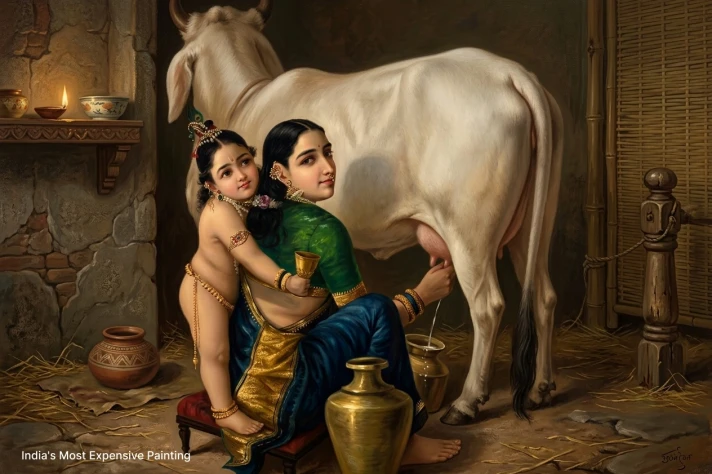
The Indian art world witnessed a landmark moment when Raja Ravi Varma's iconic 1painting Yashoda and Krishna was auctioned for an extraordinary ₹167.2 crore (approximately $17.9 million) at a Saffronart auction in New Delhi on April 1, 2026. This remarkable sale established a new benchmark, surpassing the previous auction record held by M.F. Husain's Untitled (Gram Yatra), which sold for ₹118 crore in 2025. The achievement not only reflects the growing appreciation for India's artistic heritage but also highlights the increasing demand among Indian and international collectors for museum-quality Indian masterpieces.
The painting was acquired by Dr. Cyrus Poonawalla, founder of the Serum Institute of India, who described it as a priceless national treasure and announced plans to make it accessible for public viewing on selected occasions.
The Masterpiece That Captivated Collectors
Created during the 1890s, Yashoda and Krishna represent one of Raja Ravi Varma's finest artistic achievements. The painting portrays a tender scene from Indian mythology, where Mother Yashoda is milking a cow while young Krishna mischievously reaches for a bowl of milk.
Several factors contribute to its exceptional significance:
- A seamless blend of European academic realism with Indian mythological storytelling.
- An intimate and human portrayal of divine characters, making mythology relatable to everyday life.
- A masterpiece from the peak of Varma's career, when his artistic vision transformed the way Indian mythology was represented across the country.
Originally estimated between ₹80 crore and ₹120 crore, competitive bidding ultimately pushed the final sale price far beyond expectations, demonstrating the extraordinary demand for historically significant Indian artworks.
Why This Auction Matters
While the headline-making price captured worldwide attention, its broader impact on the Indian art market is even more significant.
Indian Art Has Become a Global Investment Category
Today, exceptional Indian artworks are increasingly viewed as long-term cultural assets that may also hold financial value, alongside traditional assets such as real estate, precious metals, and luxury collectibles. Indian and international collectors increasingly recognize the cultural significance and potential financial value of historically important artworks.
The Indian Art Market Continues to Grow
This record follows a series of landmark auction results for celebrated artists including V.S. Gaitonde, S.H. Raza, Amrita Sher-Gil, M.F. Husain, and now Raja Ravi Varma. Each successive milestone reflects growing confidence in India's art market and its global relevance.
Legacy Artists Continue to Command Premium Value
Although modern Indian masters have dominated recent auctions, this sale reaffirms the enduring appeal of India's pioneering artists. Raja Ravi Varma remains one of the country's most influential painters, whose works continue to inspire collectors, historians, and museums worldwide.
Cultural Heritage Comes with Responsibility
As Raja Ravi Varma's paintings are classified as National Art Treasures under Indian law, they cannot be exported and may only be sold within India. Ownership therefore extends beyond private collecting, it represents the preservation of India's cultural heritage for future generations.
What Collectors Can Learn
This historic auction offers valuable insights for collectors, investors, and art enthusiasts.
Provenance Matters - Artworks with documented ownership history, historical significance, and cultural importance, whether rooted in traditional or contemporary styles, consistently attract stronger collector demand and premium valuations.
Record Sales Influence the Entire Market - High-profile auction results often create positive momentum throughout the broader art ecosystem, benefiting established, emerging, and mid-career artists alike.
Private Collectors Are Supporting Public Access - Many leading collectors today view themselves as custodians of cultural heritage, increasingly sharing important works through museum loans, exhibitions, and public displays.
Indian Art Deserves Greater Attention - From classical masters to contemporary innovators, India's artistic landscape continues to evolve, creating exciting opportunities for collectors looking beyond conventional investment categories.
JCCA's Role in India's Expanding Art Landscape
Historic auction results are only one part of a thriving art ecosystem. Galleries play an equally important role by nurturing artists, educating collectors, and creating meaningful opportunities for public engagement.
JCCA Art Gallery in Jaipur is committed to promoting contemporary Indian art by showcasing both celebrated and emerging artists from across the country. While international auction houses highlight record-breaking masterpieces, galleries like JCCA help shape the future of Indian art by supporting artistic talent, encouraging collecting, and fostering deeper appreciation for India's rich creative heritage.
For those inspired by landmark moments like the Raja Ravi Varma auction, JCCA offers an accessible platform to discover exceptional artworks and become part of India's growing collector community.
Conclusion -
The ₹167.2 crore sale of Yashoda and Krishna marks far more than an auction record, it represents a defining moment in the evolution of India's art market.
As global recognition of Indian art continues to grow, collectors are increasingly viewing significant artworks not only as valuable investments but also as enduring cultural assets. Whether you are an experienced collector or taking your first steps into the world of art, this milestone signals an exciting future for Indian creativity, heritage, and collecting.